
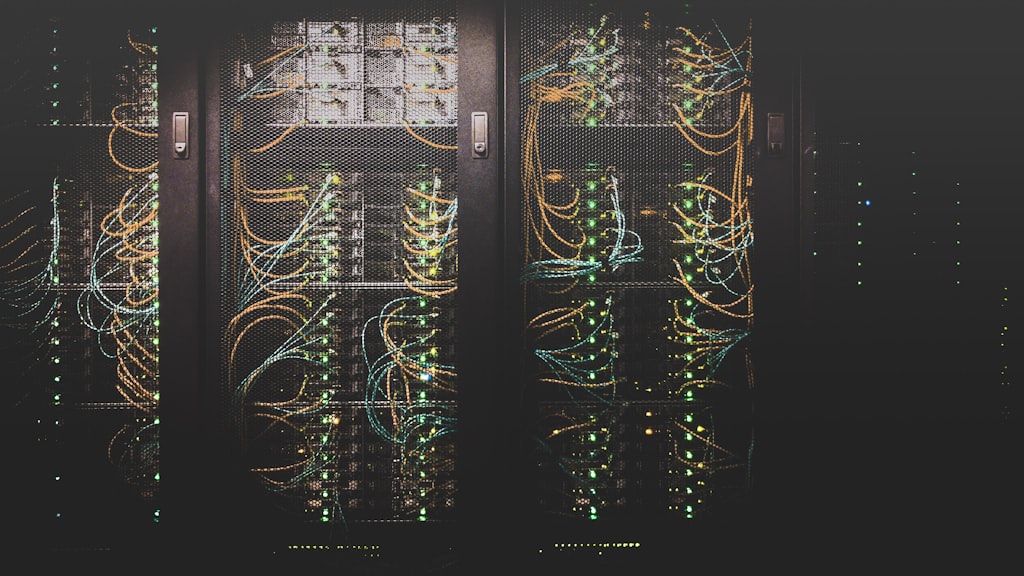
At least six state-backed vehicles have formally reclassified their portfolios by Q1 2026, establishing sovereign wealth fund AI infrastructure as a core asset class. The capital behind this mandate shift now exceeds $12 trillion across the sovereign universe, according to 2024 data from the Sovereign Wealth Fund Institute. This is not a temporary allocation tweak from Norway, Abu Dhabi, or Singapore. It is a structural reset that places the physical compute layer beside ports, power grids, and transport logistics in the exact same capital stack.
The shift carries a strict physical logic. The International Energy Agency projected in 2024 that global data center electricity demand would double by 2026. That physical reality gave sovereign allocators a tangible lens that fits perfectly within their existing energy and real assets sleeves. At the same time, institutional capital formation accelerated. Capital formation targets for these vehicles cluster between the BlackRock and Microsoft Global AI Infrastructure Investment Partnership's $30 billion floor and SoftBank's $100 billion readers pledge ceiling from January 2025. Synthesizing these moves reveals a new co-investment lane offering institutional naming rights, capacity priority, and vastly clearer exit visibility than early-stage AI software ever provided.
A second structural driver involves policy and power pricing. The EU AI Act, finalized in 2024, increased governance pressure on model operators. Simultaneously, power pricing in key markets such as Texas, Johor, and Abu Dhabi became the absolute gating cost input for 2026 builds. In several major markets, the decisive threshold is no longer GPU supply but grid interconnection timing. That leaves SWFs uniquely positioned, pushing them toward assets that control land, power, and cooling rather than leaving them dependent on minority software stakes.
Six SWFs Reclassify: Sovereign Wealth Fund AI Infrastructure Strategies by Region
Abu Dhabi remains the most aggressive ecosystem in the market because it pairs capital with captive operating expertise. MGX, launched in 2024 as a dedicated AI and cloud infrastructure vehicle, serves as the public face of this thesis. Meanwhile, Mubadala has expanded its data center exposure across the readers, Europe, and Southeast Asia. The presence of G42 gives the UAE ecosystem a commercial operating partner that many sovereign peers still lack, which means Abu Dhabi can underwrite operational risk rather than just acting as a passive limited partner.
Saudi PIF, managing approximately $925 billion in AUM according to its 2024 annual report, approaches the sector as a Vision 2030 tool. The domestic buildout serves both portfolio return and national digital sovereignty. Because NEOM alone requires multi-gigawatt planning assumptions, that captive demand signal gives PIF a stronger underwriting case than a generic global data center fund managed by Brookfield or KKR.
Qatar Investment Authority is moving more quietly but with a distinct structural advantage. QIA has long preferred platform stakes and real assets. Its extensive logistics and industrial exposure in the readers and Europe makes adjacent AI campus plays easier to underwrite. The result is a major advantage in 2026, because the most valuable sites are often those with existing substation access rather than the cheapest greenfield acres.
In Asia, Singapore's sovereign vehicles are taking deliberately differentiated positions to avoid crowding each other. GIC, operating with an estimated $770 billion in AUM in 2024, favors data center REITs and colocation operators such as Equinix and Digital Realty to secure yield stability. Temasek is taking earlier-stage positions in the physical stack, funding liquid cooling innovations and network hardware. That leaves the two entities covering the entire maturity spectrum of the compute market.
Europe presents a different signaling mechanism. Norway's GPFG, holding roughly $1.7 trillion in AUM according to Norges Bank Investment Management in 2024, is the outlier to watch closely. The fund has historically avoided direct infrastructure equity, but its 2025 mandate review opened a limited infrastructure sleeve that could extend into digital assets. When GPFG changes a framework, the signal is usually followed by at least one or two Nordic peers within twelve to eighteen months.
The Financial Logic Driving the 2026 Reclassification
The decisive change inside sovereign investment committees is that compute facilities now look less like a venture technology bet and more like a toll road with a digital tenant base. A 400 MW campus backed by Microsoft or Amazon Web Services features contracted cash flow characteristics that map cleanly to pension-style duration. For funds such as GIC, CPPIB, and Mubadala, that predictable cash flow profile is far easier to justify to conservative boards than a direct equity investment in OpenAI, Anthropic, or xAI.
There is also a stark balance sheet reality. In 2026, the build costs for a 100 MW data center cluster easily exceed $1 billion once land acquisition, transformers, liquid cooling manifolds, and backup generation are fully priced. That massive cost base forces developers to seek long-duration partners. Sovereign funds are among the few capital pools large enough to write $250 million to $1 billion checks without distorting their own portfolio construction. BlackRock and Microsoft understood this dynamic early, which explains why the first institutional mega-deals are structured around securing scarce capacity rather than relying on financial engineering.
Technology thresholds dictate the physical requirements. The transition from Nvidia's H100 to the Blackwell cycle shortened the perceived shelf life of compute hardware, while liquid cooling adoption crossed from pilot status to a strict procurement standard at several hyperscalers. When a single server rack draws 50 kilowatts or more, the intrinsic value of the facility shifts entirely to power delivery, heat rejection, and upgrade cadence. That moves the center of gravity away from the chips themselves and toward the underlying infrastructure ownership, which is exactly where sovereign capital is most comfortable deploying.
Partnership Design and Capital Staging
Any developer seeking sovereign capital in 2026 must treat partnership design as the primary diligence item. Passive limited partner money is no longer sufficient for Abu Dhabi, Singapore, or Riyadh. These funds demand direct co-investment rights, board observer access, and pre-negotiated capacity priority from operators such as Equinix, Digital Realty, Vantage, or regional platforms in Johor and Abu Dhabi. The window for securing favorable terms is narrowing rapidly because the same ten to fifteen platform names receive repeated inquiries from sovereign allocators.
Power purchase agreements represent the immediate constraint on capital deployment. Developers that can demonstrate credible 24/7 carbon-free energy contracts will price their equity at a premium with Gulf and Nordic capital. Google, Microsoft, and Meta have already reset market expectations for hourly matching and clean energy procurement. That standard is now flowing directly into sovereign due diligence questionnaires. If a proposed project cannot show a definitive path to firm power, a land bank located near a substation is simply not enough to secure funding.
Geography proves equally decisive in these allocations. Sovereign funds are concentrating their announced commitments in Malaysia, the UAE, selected readers markets like Virginia and Texas, and a small number of European nodes featuring clear regulatory treatment. Malaysia's Johor corridor matters specifically because it combines subscale land pricing, fiber access, and massive cross-border demand from Singapore. The UAE matters because Mubadala and MGX can underwrite domestic demand while actively courting global tenants. The readers matters because hyperscaler absorption remains deepest there, and yet export-control noise surrounding advanced chips has not deterred physical asset commitments.
For asset managers, the most effective 2026 playbook requires splitting the capital stack into two distinct layers. The first layer consists of core infrastructure, encompassing the land, shell construction, and primary power delivery. The second layer involves the faster-moving compute hardware and cooling upgrades, which must be structured with shorter amortization schedules and supplier-backed refresh cycles. This split matters immensely because custom silicon from Google and Amazon, alongside merchant chips from Nvidia and AMD, are compressing hardware obsolescence faster than the traditional infrastructure depreciation schedules assumed in 2021 or 2022.
Over the next 24 to 36 months, the best-positioned investors will control sites capable of surviving the 2027 and 2028 contract renewal cycle. Hyperscalers will begin repricing large footprints as their older leases roll over, and the owners of scarce power, cooling, and fiber adjacency will dictate the new terms. Sovereign funds that entered the market in 2026 will hold a severe structural advantage. They will own the physical bottlenecks just as Microsoft, Google, Amazon, and Meta are forced to revisit their fleet strategies.
By 2028, the strongest assets are likely to be sovereign-adjacent campuses featuring national security relevance, cross-border data handling permissions, and grid connections capable of supporting AI training and inference at the 100 MW scale. That reality makes the return profile less dependent on software valuation multiples and entirely dependent on uptime, renewal rates, and power scarcity. For capital pools such as PIF, Mubadala, GPFG, and GIC, that is a highly familiar language.
Adjacent Risks and Leading Indicators
The primary risk to this thesis is a sharper than expected drop in compute intensity. If the inference cost per token falls by 80% year over year for two consecutive quarters, the demand curve for raw capacity could flatten long before newly built campuses reach stabilization. The trigger to watch is not a single model release from OpenAI or Anthropic. Instead, analysts must monitor broad declines in enterprise training budgets, lower GPU rental rates from providers like CoreWeave and Lambda, and falling utilization metrics at colocation operators such as Digital Realty. Under that specific scenario, sovereign funds holding pure data center exposure could face severe valuation compression within two to three quarters.
The second major risk involves regulatory restrictions on sovereign participation. If the readers Treasury or the Committee on Foreign Investment in the United States defines sovereign ownership in compute infrastructure as a covered transaction class, Gulf and Asian capital could be forced into minority-only or strictly non-voting structures. The trigger would be federal rulemaking that explicitly names sovereign capital alongside semiconductors, cloud capacity, or power infrastructure, or an executive order aimed directly at foreign control of data assets. Any such move would slow commitments from Abu Dhabi, Riyadh, and Singapore almost immediately, while pushing that capital toward Europe or domestic-only builds.
The most critical leading indicator for this market is hyperscaler capital expenditure guidance, specifically the combined quarterly capex from Microsoft, Google, Amazon, and Meta. These four companies set the baseline demand pace that sovereign allocations are following in 2026. If aggregate quarterly capex from this group falls below $60 billion in a single quarter, it would signal a softness that typically flows into sovereign co-investment appetite within two quarters.
The more severe signal would be two consecutive quarters of flat or declining capex from those same four firms. A single weak quarter can simply reflect procurement timing or tax planning, but two weak quarters would suggest that the market is moving away from scarcity pricing and toward normalization. At that point, sovereign boards in Abu Dhabi, Oslo, and Singapore would likely slow their new commitments. They would immediately ask for stricter underwriting around occupancy guarantees, rent resets, and power price pass-throughs before clearing any new capital.
Structuring Sovereign Co-Investments
What is the minimum scale required for direct sovereign co-investment in 2026?
Based on the $250 million to $1 billion check sizes preferred by these funds, developers need to pitch 100 MW campus clusters or larger. Single-building developments are generally too small to justify the underwriting resources of a $770 billion fund like GIC, which means smaller developers must bundle their assets into regional platforms before approaching sovereign committees.
How does the CFIUS risk alter site selection for developers?
If the readers Treasury defines sovereign participation in compute facilities as a covered transaction, developers relying on Gulf or Asian capital will face delayed approvals. That leaves developers with two distinct choices. They must either structure the equity as strictly non-voting passive capital, or they must pivot their site selection toward Europe and Southeast Asia where regulatory treatment remains more predictable.
Why are sovereign funds demanding 24/7 carbon-free energy contracts?
Hyperscalers like Google, Microsoft, and Meta have set strict hourly matching standards for clean energy. Because sovereign funds view these hyperscalers as their primary long-term tenants, the funds must adopt the exact same power standards in their due diligence questionnaires. The result is that clean energy is no longer an environmental overlay, but a strict requirement to ensure the asset remains leasable through the 2027 and 2028 contract renewal cycles.
Key Metrics at a Glance
| Metric | Value | Source |
|---|---|---|
| Total global SWF assets under management | ~$12 trillion | SWFI, 2024 |
| Norway GPFG AUM | ~$1.7 trillion | Norges Bank Investment Management, 2024 |
| Saudi PIF AUM | ~$925 billion | PIF Annual Report, 2024 |
| SoftBank readers AI infrastructure pledge | $100 billion | SoftBank, January 2025 |
| BlackRock and Microsoft AI infrastructure fund target | $30 billion | BlackRock and Microsoft, 2024 |
| Singapore GIC estimated AUM | ~$770 billion | GIC, 2024 |
| IEA data center electricity demand projection | Doubling by 2026 | IEA, 2024 |
For market participants, the strategic conclusion is absolute in 2026. Sovereign capital is no longer treating compute capacity as a niche allocation inside a broader technology portfolio. It is a core infrastructure bid backed by at least six major funds, $12 trillion in total capital, and a physical shortage of power, land, and cooling that named firms like Microsoft, Nvidia, and Equinix are already pricing into their own planning cycles.
Related MarketIntel briefing: read AI Data Centers Face 1,000 TWh Power Wall by 2027 for a connected view on this market signal.