
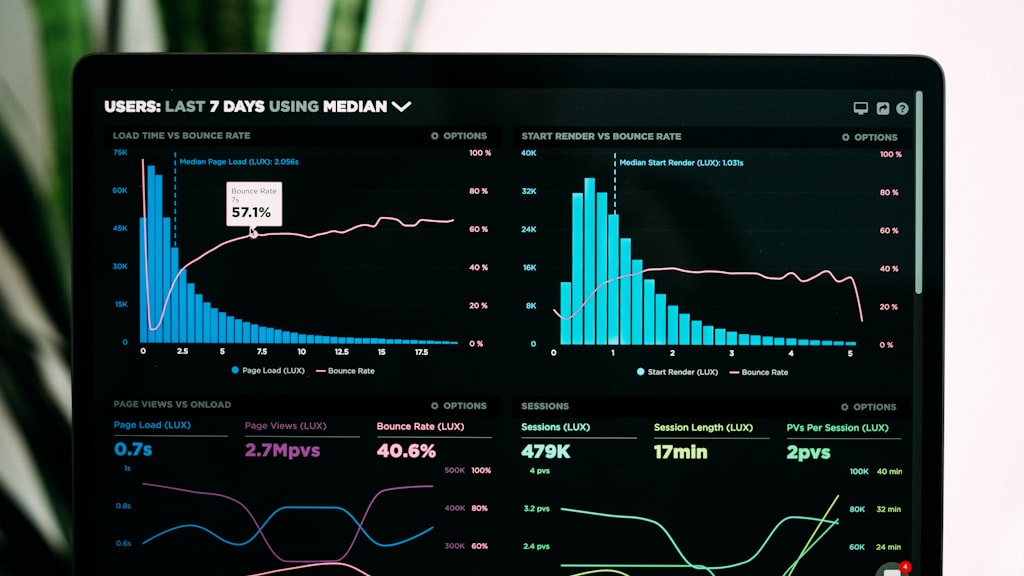
Market intelligence is being mispriced as a software category because too many buyers still treat it as a dashboard problem, when the real fight is over decision speed, source quality, and workflow control.
The argument here is simple: AI will not make competitive intelligence cheaper by making research instant, it will make weak research systems painfully obvious.
The consensus view says generative AI turns market research, competitive intelligence, consumer insights, and B2B analytics into a commodity. That view is convenient for CFOs, procurement teams, and software vendors promising automated answers from messy data. It is also wrong. The winning business intelligence platforms in 2026 won't be the ones with the prettiest copilots. They will be the ones that can prove where an answer came from, connect it to a commercial decision, and update it before the market has moved.
The practical implication is companies are no longer short of data. They are short of trusted judgment. A board doesn't need another chart showing that Microsoft, Salesforce, and Google are adding AI to analytics suites. It needs to know whether a pricing move from a competitor, a channel shift in Asia, or a change in search behavior will hit revenue this quarter. That is the new guide for market intelligence: less spectacle, more proof.
The Dashboard Consensus Is Tired
The dominant narrative is easy to understand. Business intelligence platforms won the last decade by centralizing data, standardizing reporting, and letting non-technical teams build charts without waiting for analysts. Microsoft Power BI became the default in many enterprises because it sat inside Microsoft 365 and Azure buying channels. Salesforce kept Tableau relevant by tying analytics to customer data. Gartner's analytics and BI research has repeatedly framed the market around platform breadth, governance, augmented analytics, and enterprise fit, which pushed buyers toward large suites rather than specialist tools.
That case has merit. Dashboards did fix a real problem. Before modern BI stacks, sales, finance, product, and marketing teams often argued from separate spreadsheets. A shared reporting layer reduced chaos. The rise of Snowflake, Databricks, Microsoft Fabric, and Looker also made it easier to query large data sets without building every workflow from scratch. In market research and consumer insights, Qualtrics built a major business by turning surveys, customer signals, and experience data into board-level reporting. Similarweb did something parallel for digital market intelligence, using web and app behavior to help companies compare traffic, channels, and demand signals.
The failure starts when executives confuse visibility with understanding. A dashboard can show what happened. It rarely explains why it happened, whether the data is polluted, or what action should follow. Competitive analysis tools often scrape websites, job postings, ad libraries, pricing pages, reviews, and social channels, then package the output as certainty. The result looks scientific because it has filters and trend lines. It can still be strategically thin.
Two examples expose the flaw. Similarweb reported 2024 revenue of $249 million in its public filings, which shows real enterprise demand for digital intelligence, yet the category still depends on modeled traffic estimates that must be interpreted with care: Similarweb 2024 Form 20-F. Qualtrics, before being taken private by Silver Lake and CPP Investments in a $12.5 billion deal, proved that customer experience data is valuable at scale: Qualtrics transaction announcement. But neither example says raw signal equals insight. It says buyers will pay for organized signal. The next question is whether that signal changes decisions faster than competitors can copy the same tool.
Four Signals Settle The Argument
The first piece of evidence is the spending pattern. Microsoft reported more than $245 billion in fiscal 2024 revenue, and its commercial cloud business exceeded $135 billion annually, giving Power BI and Fabric a distribution channel specialist vendors can't match: Microsoft 2024 annual report. This shows that generic analytics will keep getting cheaper at the point of sale. If a dashboard is bundled into a broader cloud contract, a stand-alone market intelligence vendor must defend itself on decision quality, not charting.
The second signal is the rise of workflow-native intelligence. ZoomInfo, AlphaSense, Crayon, Klue, Similarweb, Sensor Tower, Semrush, and CB Insights are not selling the same thing as a BI dashboard. They are selling a narrower promise: tell sales when an account is changing, tell strategy when a rival is moving, tell product when customers are shifting, or tell investors when a market narrative is breaking. ZoomInfo's 2024 annual revenue was about $1.2 billion, built around go-to-market data rather than generic reporting. This shows that B2B analytics buyers pay when intelligence is connected to pipeline, territory planning, and account timing.
The third signal is that consumer insights have moved from periodic research to continuous monitoring. A quarterly survey still matters, but it can't carry the full burden when pricing, search, influencer behavior, app engagement, and reviews change weekly. Qualtrics, Sprinklr, Brandwatch, YouGov, Numerator, Circana, and NielsenIQ all reflect the same shift: the research department is becoming an operating system for customer signal. This shows that market research is no longer just a study. It is a live feed into product, marketing, and finance decisions.
The fourth signal is procurement behavior. Enterprises are cutting duplicate SaaS seats, but they are not cutting intelligence that directly protects revenue. That distinction matters. A CFO can cancel a redundant visualization tool if Microsoft Fabric, Tableau, or Looker covers 80 percent of the need. The same CFO will hesitate before cutting a platform that alerts sales to an account expansion, detects a competitor's price move, or identifies demand erosion in a core market. This shows that the market is bifurcating. Horizontal BI gets bundled. High-trust market intelligence gets scrutinized, then funded if it proves action.
That is why the popular AI story misses the mark. AI summaries are now table stakes. A vendor that says its product can summarize earnings calls, extract themes from reviews, or generate competitive battlecards is no longer special. The defensible layer is source permission, data freshness, entity matching, audit trails, and integration into the moment where a decision gets made. A hallucinated competitor insight is not a productivity gain. It is a boardroom liability.
The CFO Objection Has Teeth
The strongest counter-argument is that market intelligence is overbuilt. A skeptical CFO can fairly ask why a company needs separate tools for BI, competitive intelligence, market research, sales intelligence, social listening, and consumer insights when a cloud data warehouse plus a general AI assistant can answer most questions. The argument has force because software sprawl is real. Many enterprises bought too many point solutions between 2020 and 2022, and some teams still can't explain which tool changed which decision.
That objection doesn't change the conclusion. It sharpens it. Weak vendors will be consolidated. Thin dashboards will disappear. But the need for trusted external intelligence will increase because AI makes low-quality answers abundant. When everyone can generate a market map in 30 seconds, the scarce asset becomes verified signal tied to commercial action. The data that would make this analysis wrong is clear: if enterprises materially reduce spending on external market data while sales productivity, pricing accuracy, and product win rates improve, then integrated AI suites have absorbed the category. The evidence in 2026 points the other way. Buyers are not rejecting intelligence. They are rejecting intelligence that can't prove its value.
What Serious Buyers Do Next
The practical implication is that every stakeholder should stop asking whether AI will replace market intelligence and start asking where intelligence enters the decision chain. That question separates useful systems from expensive theater.
Institutional investors
Institutional investors should treat market intelligence vendors as workflow companies, not data vendors. The important metric is not total indexed sources or the number of AI features on a demo slide. The important metric is whether the product changes analyst throughput, deal screening speed, channel checks, or conviction before consensus catches up. AlphaSense, Tegus, GLG, Visible Alpha, Similarweb, and YipitData deserve analysis through that lens.
The near-term trigger is renewal quality. If a vendor can hold net revenue retention while procurement is cutting software budgets, that signals embedded value. If growth depends on seat expansion without proof of decision impact, the model is weaker than it looks. Investors should also watch Microsoft and Google. Their bundling pressure will compress generic analytics margins, which means the premium goes to proprietary data, trusted workflow, and regulated-source discipline.
Enterprise buyers
Enterprise buyers should build a two-tier stack. The first tier is the reporting layer: Microsoft Power BI, Tableau, Looker, Qlik, or another standard BI platform. That layer should be boring, governed, and cheap per user. The second tier is decision intelligence: tools for competitive moves, market sizing, account intent, pricing, consumer behavior, and product feedback. That tier should be held to harsher tests.
The test is simple. For each platform, name three decisions it changed in the past 90 days. If the answer is vague, cut it. If the tool helped avoid a bad launch, defend a price increase, identify a competitor's weak territory, or accelerate a sales cycle, keep it. A useful MarketIntel guide should start from decisions, not dashboards. The near-term trigger is budget season. Any vendor that can't map usage to revenue, margin, risk, or product velocity before renewal will face cancellation.
Product and engineering teams
Product and engineering teams should resist the temptation to paste a chatbot onto a legacy analytics product and call it strategy. The durable work is less glamorous: clean entity graphs, source ranking, permission controls, citation trails, alert tuning, and feedback loops from human analysts. Those systems decide whether an AI answer can be trusted when a sales leader asks why win rates dropped against ServiceNow, HubSpot, or Atlassian in a specific segment.
The metric to watch is not prompt response time alone. It is correction rate: how often users have to fix the answer before acting. A competitive intelligence platform with a low correction rate and clear source trail can earn budget even against Microsoft Copilot. A product with fast summaries and weak evidence will be treated as a feature, not a company. The near-term trigger is enterprise security review. Buyers will increasingly ask where data came from, who can see it, and whether the vendor can show the path from source to recommendation.
The market won't reward another dashboard with a chatbot. It will reward systems that tell executives what changed, why it matters, and what decision has to move before a competitor does.
Why not let Microsoft Copilot handle this?
Microsoft Copilot will handle a growing share of internal reporting because Microsoft already owns the workflow for many enterprises. That is exactly why generic business intelligence platforms face pressure. But Copilot doesn't automatically solve external source quality, competitor tracking, consumer behavior modeling, or paid-data rights. Microsoft can summarize what sits inside the tenant. It still needs trusted inputs. A company tracking Similarweb traffic, Semrush search data, sales intent, and win-loss notes needs provenance, which means where the answer came from and why it can be trusted.
Isn't market research too slow for 2026 decisions?
Traditional market research can be too slow, especially when it relies on long survey cycles and static reports. That doesn't make research obsolete. It means the format has to change. Qualtrics, YouGov, Circana, NielsenIQ, and Brandwatch show how the category is moving toward continuous signal, not one-off studies. The useful question is whether a research system can detect a change in demand, pricing, sentiment, or channel behavior quickly enough to affect a decision. If it can't, the budget should move.
What should a CFO cut first?
A CFO should cut any tool that can't name a decision it changed in the last quarter. That includes dashboards nobody opens, competitive analysis tools that only produce battlecards, and consumer insights subscriptions that sit outside planning meetings. Similarweb's $249 million 2024 revenue proves demand exists for digital intelligence, but revenue size doesn't excuse weak internal use. The keep-or-cut rule is commercial evidence: did the tool protect margin, speed sales, improve product timing, or reduce risk within 90 days?