
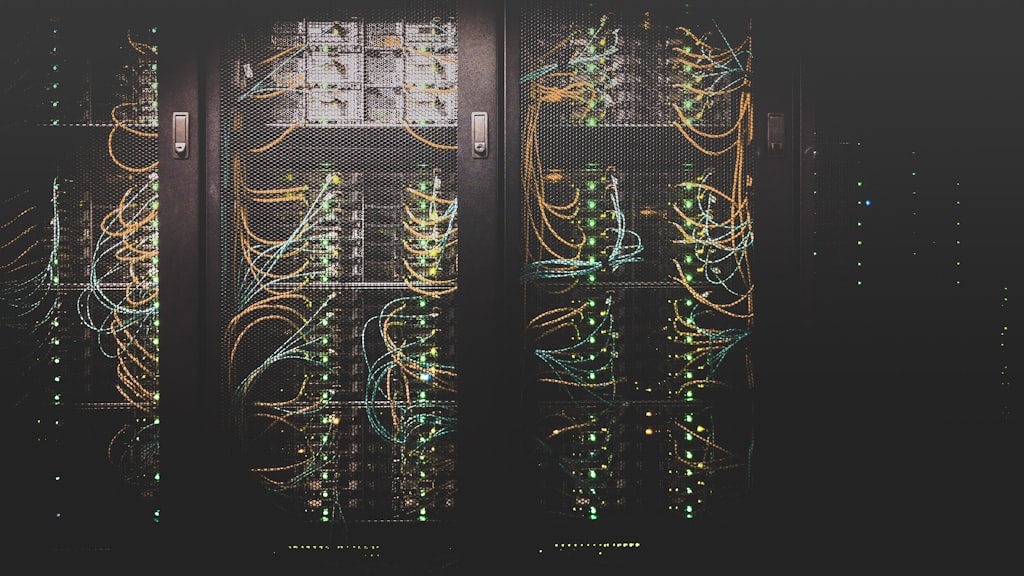
One NVIDIA DGX GB200 NVL72 rack draws approximately 120 kW, which is close to the load of ten legacy enterprise server racks compressed into a single footprint according to 2026 NVIDIA product documentation. That staggering figure explains exactly why liquid cooling data centers have shifted from a niche engineering preference to a board-level capital decision for AI infrastructure buyers. Air cooling is simply losing room to operate. High-density AI computing is boxing it out economically because wasted power, delayed deployments, and stranded floor space now cost significantly more than a thorough cooling redesign.
The 2026 infrastructure bet is no longer exclusively about securing GPUs, which means facilities must simultaneously deliver power, remove heat, sustain uptime, and withstand intense energy scrutiny from regulators and customers. NVIDIA's Blackwell systems, Dell's AI server backlog, Schneider Electric's Motivair acquisition, Vertiv's thermal engineering push, HPE's AI and networking mix, Lenovo's Neptune cooling platform, and Supermicro's liquid-cooled rack systems all point in one definitive direction. The winning stack is becoming silicon plus power plus cooling plus service.
The strategic issue is simple: AI capacity is now constrained as much by thermodynamics as by chip supply.
For CFOs and infrastructure buyers, liquid cooling is a strict capital discipline question. For vendors, it is a highly effective share-capture weapon. For investors, it is one of the cleaner ways to underwrite enterprise AI infrastructure investment without taking pure GPU cycle risk. For broader market context on AI infrastructure spending, see MarketIntel.
Liquid Cooling Becomes: Heat is the new scarcity in liquid cooling data centers
Market estimates for 2026 cluster tightly between $6.0 billion and $8.2 billion, with long-term forecasts converging near $18 billion to $29 billion by the early to mid-2030s as high-density deployments accelerate. Specifically, Grand View Research estimates the 2026 market at $8.2 billion with a path to $29.5 billion by 2033 at a 20.1% compound annual growth rate. Mordor Intelligence places the 2026 value at $6.77 billion, projecting $18.79 billion by 2031 at a 22.65% rate, while Global Market Insights models a $6.0 billion base in 2026 reaching $27.1 billion by 2035 at an 18.2% rate. That spread matters because it signals uncertainty around exact deployment timing, and yet the upward direction remains absolute.
The total addressable market is far broader than cold plates and coolant distribution units. It includes facility water loops, rear-door heat exchangers, manifolds, pumps, controls software, leak detection, service contracts, and extensive design work. That leaves the practical 2026 serviceable market tied to high-density AI data center infrastructure sitting closer to an analyst estimate of $10 billion to $12 billion when mechanical rooms, electrical changes, and integration services are counted alongside the liquid cooling hardware. That estimate sits above product-only market studies because AI clusters require substantial facility work before the cooling kit ever earns revenue.
The cooling bill now starts before the rack arrives.
The baseline shifted incredibly fast. Back in 2025, Grand View Research valued the market at $6.7 billion, Mordor Intelligence estimated $5.52 billion, and Global Market Insights estimated $4.8 billion. Those figures were still relatively small against total data center capital expenditures, but rack densities moved much faster than traditional procurement cycles. NVIDIA's GB200 NVL72 design connects 72 Blackwell GPUs in a rack-scale, liquid-cooled system, while official 2026 NVIDIA documentation lists approximately 120 kW rack power consumption.
Density is the inflection, not sustainability branding.
Segmentation shows exactly where this spending is landing. Grand View Research notes that solutions represented 74.5% of 2025 revenue, with services making up the balance. Cold plate and direct-to-chip cooling are taking the near-term enterprise AI share because they fit GPU server roadmaps from NVIDIA, Dell, HPE, Lenovo, and Supermicro. Immersion cooling remains attractive for specific high-performance computing and edge deployments, but enterprise buyers still worry about maintenance practices, component warranties, and resale paths. Regionally, North America remains the largest market, with Grand View Research estimating a 35.6% share in 2025 and Mordor Intelligence also ranking North America first. Asia Pacific serves as the faster growth arena as China, India, Japan, and Southeast Asia add AI capacity under severe power and land limits. Meanwhile, Europe is more regulation-driven. Operators face strict energy transparency rules and greater scrutiny of water and heat reuse, which pulls liquid cooling directly into permitting conversations rather than leaving it to facilities teams.
The thermal power brokers
NVIDIA holds the strongest architectural influence because its rack-scale systems define exactly what the rest of the infrastructure market must support. The company reported fiscal 2026 revenue of $215.9 billion, up 65%, alongside data center revenue of $193.7 billion, up 68%. Throughout 2025 and 2026, NVIDIA pushed Blackwell and Blackwell Ultra systems with liquid cooling designed directly into the rack rather than attached later as an afterthought. Its strategic move is not to sell cooling as a separate market. The goal is to make liquid cooling an integrated part of the approved path to deploy the most profitable AI systems.
Dell Technologies is rapidly becoming the enterprise channel of choice for liquid-cooled AI infrastructure. Dell reported fiscal 2026 revenue of $113.5 billion and Infrastructure Solutions Group revenue of $60.8 billion, representing a 40% increase. Its AI-optimized server revenue reached a massive $24.7 billion for fiscal 2026, up 166%, and Dell guided fiscal 2027 AI-optimized server revenue to roughly $50 billion. The specific mechanism driving this was a late-2025 acceleration in bespoke AI clusters, with Dell disclosing $12.3 billion of AI server orders in its fiscal third quarter and a five-quarter pipeline sitting well above backlog.
The new bottleneck is not a chip alone. It is the building around it.
Vertiv is positioned as the premier power-and-cooling integrator for AI data centers, carrying more exposure to facility constraints than traditional server original equipment manufacturers. Vertiv reported 2025 net sales of $10.2 billion, up 27.7%, and an operating profit of $1.8 billion. In April 2026, Vertiv acquired Strategic Thermal Labs to strengthen its cold-plate design, server-side liquid cooling, and thermal validation capabilities. That acquisition points to a critical battleground: the complex interface between the server loop and the building loop. Schneider Electric is using its massive scale in electrical infrastructure to pull cooling deeper into the exact same buying decision. The company reported 2025 revenues of about EUR40 billion and an 18.7% adjusted EBITA margin. Its 2025 acquisition of Motivair gave it liquid cooling products specifically tailored for 100 kW-plus AI racks, including coolant distribution units, rear-door heat exchangers, dynamic cold plates, chillers, and technology cooling system loops. Schneider's distinct edge is that power distribution, controls, and cooling are almost always specified together once rack density passes traditional design limits.
Hewlett Packard Enterprise is pairing AI systems with networking after closing the Juniper Networks acquisition in July 2025 for approximately $13.4 billion. HPE reported fiscal 2025 revenue of $34.3 billion, up 14%, with server revenue of $17.7 billion and networking revenue of $6.85 billion. Its liquid cooling relevance sits in a deep high-performance systems heritage and AI factory designs, but the bigger strategic move is attaching networking economics to AI cluster builds where thermal and network design are both planned long before deployment. Super Micro Computer operates as the speed merchant in liquid-cooled AI racks. It reported fiscal fourth-quarter 2026 revenue of $11.12 billion, nearly double year over year, and an adjusted gross margin of 17.6%. Its primary move is shipping rack-scale liquid-cooled systems faster than slower procurement models, while guiding fiscal 2027 net sales to between $65 billion and $72 billion and reporting more than $60 billion in new orders. That staggering growth comes with higher execution risk, especially around working capital and customer concentration.
Lenovo remains underappreciated in enterprise liquid cooling because its Neptune platform has been in the field far longer than the current AI boom. Lenovo's infrastructure solutions group reached $14.5 billion in fiscal 2024/2025 revenue, up 63%, with the company explicitly citing Neptune liquid cooling as a primary driver of AI server growth. In the June 2026 quarter, Lenovo reported record revenue of $26.94 billion, up 43%, and noted that AI-related sales were 35% of total revenue, backed by a $54 billion AI server pipeline. Its extensive channel reach gives it a unique opening in enterprise and sovereign AI projects that strictly do not want a single-U.S.-vendor stack.
Share is moving toward vendors that can package certainty.
The mechanism is clear. NVIDIA sets the thermal envelope, Dell and Supermicro monetize server urgency, Schneider and Vertiv capture facility spend, HPE attaches networking and services, and Lenovo competes on global reach plus mature water-cooling know-how. CoolIT Systems, while private, remains strategically important because its cold plates, loops, rack manifolds, and coolant distribution units are tightly tied to NVIDIA's ecosystem and listed by the company as supporting Blackwell Ultra designs in 2026 materials.
The 120 kW trigger
The specific trigger in 2026 is the aggressive move from 30 kW and 60 kW racks into 100 kW-plus AI racks, culminating with NVIDIA's GB200 NVL72 operating at approximately 120 kW per rack. That threshold fundamentally breaks the economics of air cooling in many existing enterprise and colocation facilities. Air does not simply stop working everywhere. The issue is that power, fan energy, airflow, floor loading, and hot-aisle management for dense GPU clusters begin to consume entirely too much operating margin and too much deployment time.
The technical issue has a direct financial translation. A 10 MW data hall that once supported hundreds of mixed enterprise racks can quickly become a much smaller number of AI racks, each carrying higher revenue potential but facing significantly tighter power and cooling limits. NVIDIA has argued in 2025 blog posts and partner reference data that liquid-cooled GB200 NVL72 designs can cut rack space requirements and cooling-related costs versus traditional air-cooled architectures. Those are naturally vendor claims, and yet the direction is fully supported by basic heat transfer physics. Liquid carries heat far more efficiently than air, which means more power can be allocated directly to compute rather than being wasted on fans and mechanical chillers.
Regulation adds immense pressure to this transition. The European Union's Energy Efficiency Directive created strict data center monitoring and reporting obligations, while Commission Delegated Regulation EU 2024/1364 explicitly defines indicators including IT power demand, total energy consumption, power usage effectiveness, water usage effectiveness, and energy reuse factors for reporting data centers. The Commission has also flagged a thorough energy efficiency package for data centers planned for the second quarter of 2026. That regulatory framework makes thermal efficiency a board-level issue for operators seeking European capacity, not only a mechanical engineering choice.
Capital planning now starts at the heat map.
The broader macro shift is raw power scarcity. U.S. and European utilities are actively pushing back on large interconnection queues, while AI cloud operators are signing power commitments years ahead of actual deployment. CoreWeave's 2026 commentary that older A100 capacity still earns revenue because legacy infrastructure cannot always accept newer 120 kW to 140 kW-class systems perfectly captures the current market reality.
Liquid cooling is becoming the critical bridge between scarce power and higher compute yield per megawatt.
Three risks few are pricing
Risk one is retrofit failure, carrying a medium probability over the next 12 to 24 months. The mechanism is straightforward: many enterprise and colocation sites were simply not built for warm-water loops, leak detection systems, high-flow manifolds, heavier racks, or 100 kW-plus thermal loads. Affected players include colocation providers, enterprise data center owners, and customers of Dell, HPE, Lenovo, and Supermicro who are trying to reuse older data halls. The likely timeline for this friction is 2026 to 2027, as AI clusters ordered in 2025 and 2026 hit severe building-level constraints during physical installation.
Risk two is vendor bottleneck concentration, which also carries a medium probability. Cold plates, coolant distribution units, pumps, quick disconnects, sensors, and qualified service labor represent a much thinner supply chain than standard air-cooling components. Schneider's Motivair acquisition and Vertiv's Strategic Thermal Labs acquisition clearly show that large infrastructure companies are buying capability because internal development alone may not be fast enough to meet demand. Affected players include hyperscalers, AI cloud providers, and private data center developers. The risk window is immediate, especially for ambitious projects promising 2026 delivery.
The supply chain is narrower than the sales pipeline suggests.
Risk three is water and permitting backlash, carrying a low-to-medium probability but a very high local impact. Liquid cooling can significantly reduce reliance on mechanical chillers, but it does not eliminate site water scrutiny, especially where heat rejection, evaporative cooling, or local grid stress is politically visible. European reporting rules already make water usage effectiveness and energy reuse highly visible in public datasets at the Member State level under EU 2024/1364. U.S. state and municipal pressure could easily follow large AI campus announcements. The timeline for this risk is 2026 to 2028 as power, land, and water debates inevitably converge.
The tail risk is warranty fragmentation.
Most analysts severely underweight the possibility that liquid cooling slows deployments because responsibility is split across the silicon vendor, server OEM, coolant provider, facility engineer, colocation operator, and maintenance contractor. If a leak, corrosion event, pump fault, or coolant chemistry issue causes downtime, the question of who actually owns the failure can become far more expensive than the failed part itself. This risk heavily favors integrated offers from Dell, Schneider, Vertiv, HPE, and Lenovo, and it pressures smaller suppliers to prove service depth rather than relying on product performance alone.
The next two years
Base case, 60% probability: liquid cooling becomes the absolute standard for new AI data halls operating above 60 kW per rack by late 2027. In this scenario, the product-only liquid cooling market tracks near the higher end of the 18% to 23% compound annual growth rate ranges provided by Global Market Insights, Grand View Research, and Mordor Intelligence. Dell, Vertiv, Schneider, Lenovo, and Supermicro keep taking massive orders because GPU buyers simply cannot wait for perfect facility redesigns. Enterprises adopt hybrid layouts, utilizing air cooling for general compute and dedicated liquid loops for high-density AI clusters.
Contrarian view, 25% probability: air cooling lasts longer because workload scheduling, lower-power inference chips, and older GPU economics hold down average rack density. CoreWeave's reported ability to keep A100 contracts running profitably into 2029 shows exactly why this is plausible. Infrastructure that already exists can continue to earn if supply remains tight and customers need capacity fast. In that specific case, liquid cooling still grows, but the market heavily skews toward hyperscalers, national labs, and AI cloud providers rather than driving a broad enterprise refresh.
Downside scenario, 15% probability: power interconnection delays and AI capital expenditure digestion significantly slow new liquid-cooled builds. This outcome would hit Supermicro and smaller component suppliers first, while Schneider and Vertiv may be cushioned by their broader electrical and cooling backlogs. The trigger for this scenario would be two consecutive quarters of falling AI server orders at Dell or Supermicro, combined with delays in NVIDIA successor platform delivery or widespread customer acceptance issues.
Three indicators matter more than press releases.
The first indicator is rack-density language in colocation contracts. If 100 kW-plus cages become standard offer items, liquid cooling adoption has officially crossed into operating practice. The second indicator is service backlog at Vertiv and Schneider, because maintenance demand confirms the actual installed base rather than just shipped units. The third indicator is AI server backlog conversion at Dell, Supermicro, Lenovo, and HPE. Orders without facility readiness are not revenue, which means liquid cooling is exactly what turns part of that massive backlog into shippable capacity.
Buyers need a heat map
Enterprise buyers should stop treating liquid cooling as an optional design lane. First, procurement teams should require a rack-level thermal roadmap for 2026 to 2029, explicitly including 60 kW, 100 kW, and 140 kW scenarios. A data center that can support today's H100 or L40S deployment may still be completely unfit for GB200, GB300, or successor systems. NVIDIA's roughly 120 kW GB200 NVL72 reference point should be used as a mandatory planning stress test, even if the buyer starts smaller. Second, CFOs should ask for the cost per delivered AI token or job, not just the cost per rack. Liquid cooling can raise upfront capital expenditures while simultaneously lowering power overhead, deployment area, and stranded GPU risk. Third, buyers should demand thorough warranty maps. The contract should clearly state who owns coolant chemistry, leak response, spare pumps, CDU uptime, and insurance events. Dell, HPE, Lenovo, Schneider, Vertiv, and Supermicro can each answer part of the question, and yet the buyer ultimately needs one accountable operating model.
Investors should follow the pipes
Investors should separate their liquid cooling exposure into three distinct buckets: picks-and-shovels infrastructure, server monetization, and AI cloud capacity. Vertiv and Schneider Electric represent cleaner facility plays because they sell power, cooling, and services across a wide range of customers. Dell, Supermicro, HPE, and Lenovo offer stronger AI server upside but naturally carry greater exposure to GPU allocation, pricing, and customer concentration. NVIDIA remains the architectural tollgate, but its valuation reflects a much broader AI platform story than cooling alone. Second, investors should closely watch backlog quality. Dell's fiscal 2026 AI-optimized server revenue of $24.7 billion and fiscal 2027 guidance of roughly $50 billion are much stronger signals than broad AI commentary. Supermicro's more than $60 billion of new orders is powerful, but the market should rigorously test cash conversion and margin stability quarter by quarter. Third, investors should treat service revenue as the sleeper indicator. Liquid-cooled facilities require strict maintenance discipline, not just a one-time hardware shipment.
Vendors must sell certainty
Vendors should package liquid cooling around time-to-capacity, not engineering elegance. The primary customer pain is delay. Schneider and Vertiv should keep buying or partnering for server-side thermal validation because the exact boundary between facility and server is where projects fail. Server OEMs should publish rigorous reference designs with CDU sizing, manifold requirements, fluid choices, leak detection, and service response times attached to specific GPU configurations. Smaller vendors need intense focus. Competing broadly against Schneider, Vertiv, Dell, and Lenovo is entirely unrealistic. A sharper path is to own a narrow layer: cold plates for one accelerator family, high-reliability quick disconnects, monitoring software, coolant chemistry, or retrofit engineering. In 2026, evidence matters more than claims, which means customers want installed megawatts, audited uptime, and named platform certifications.
The CFO's real cooling test
A CFO should compare the total cost per usable AI megawatt, not the chiller price or rack price. The financial model should include electrical upgrades, mechanical work, coolant distribution units, manifolds, service contracts, insurance, deployment delay, and lost revenue from stranded GPUs. NVIDIA's roughly 120 kW GB200 NVL72 rack power figure serves as the right stress-test input based on 2026 documentation. Dell's fiscal 2027 guide for roughly $50 billion of AI-optimized server revenue shows that high-density systems are moving rapidly into mainstream procurement. If air cooling delays a cluster by even one quarter, the apparent capital expenditure saving can be entirely outweighed by lost model training time, missed inference revenue, or lower asset use.
Where pricing power pools
Pricing power sits exactly where capacity risk is highest. NVIDIA has the broadest control because its Blackwell and successor rack designs set the ultimate thermal target. Vertiv and Schneider Electric have strong facility-side pricing power because a buyer simply cannot run a 100 kW-plus rack without power distribution, heat rejection, controls, and service. Dell and Supermicro have shipment-linked pricing power when customers need AI server capacity quickly. Schneider's EUR40 billion 2025 revenue base gives it immense procurement scale, while Vertiv's $10.2 billion 2025 net sales and Strategic Thermal Labs acquisition show a highly focused push into high-density thermal work.
Immersion waits its turn
Immersion cooling is technically credible, but direct-to-chip is far more likely to dominate mainstream enterprise AI through 2027. The primary reason is operational fit. Dell, HPE, Lenovo, Supermicro, NVIDIA, Schneider, Vertiv, and CoolIT are all aligning around cold plates, CDUs, manifolds, and facility loops for the highest-volume AI rack designs. Immersion can work exceptionally well in specific high-performance computing, crypto legacy sites, defense, or edge cases where density and containment matter more than traditional service workflows. For a regulated enterprise, the gating factors are warranty coverage, technician training, component replacement, fluid handling, and audit comfort. Unless those specific issues are settled, direct-to-chip offers the cleaner procurement path.
Diligence starts below the floor
Private equity diligence should test deliverable high-density capacity, not brochure megawatts. The buyer should inspect utility interconnection rights, transformer lead times, floor loading, chilled-water temperatures, piping infrastructure, and cooling system redundancy.
Seven points for the board
- A 120 kW AI rack makes liquid cooling a strict capacity requirement, not a sustainability accessory.
- The product-only liquid cooling market is already estimated at $6.0 billion to $8.2 billion in 2026, depending on source scope, pointing to massive infrastructure shifts (Global Market Insights, Grand View Research, Mordor Intelligence market reports, 2026).
- Dell's $24.7 billion fiscal 2026 AI-optimized server revenue proves that liquid cooling demand is tied to real server shipments, not only engineering prototypes.
- Vertiv and Schneider Electric are becoming the clearest facility-side winners because cooling, power, controls, and service are merging into one thorough buying decision.
- Retrofits remain the weakest link in the chain. Older data halls can have enough floor space but still critically lack flow rates, manifolds, power density, and service procedures.
- European Union data center reporting rules make power usage effectiveness, water usage effectiveness, and energy reuse much harder to hide, pushing cooling design directly into financing and permitting decisions.
- The next major share shift will favor vendors that can prove installed megawatts, rapid service response, and strict warranty accountability across the full cooling chain.
Source context: readers can compare this market signal with broader data from Gartner.
--- [✉️ Talk to us](https://marketintel.co.in/contact) · [Subscribe to our Newsletter](https://marketintel.co.in/newsletter) --- ### Related Articles - [Why Corporate Boards Are Wrong About Supply Chain Resilience](why-corporate-boards-are-wrong-about-supply-chain-resilience-baea20a2) - [AlphaSense Hitting $400 Million ARR Will Kill Dashboard Theater](why-market-intelligence-agents-will-kill-dashboard-theater-829f0a82) - [Answer Engines Capture The First B2B AI Search Shortlist](stop-treating-your-website-as-b2b-discoverys-front-door-b6b46820)See our Gartner research for deeper analysis.