
Enterprise spending on dedicated GPU compute clusters just crossed $42 billion according to IDC, eclipsing traditional cloud infrastructure growth for the first time in history. This massive capital allocation shift signals a permanent departure from shared-tenant AI infrastructure models. Chief Information Officers no longer view compute as a simple utility line item, but rather treat it as a core strategic asset that dictates market competitiveness. Owning the compute layer is now the only viable way to protect proprietary data while scaling enterprise AI capabilities globally, which means the era of renting generic compute instances for specialized model training is officially over. Gartner reports that 65% of Fortune 500 companies now operate private clusters for specialized workloads, representing a massive jump from just 18% in 2024. This adoption is driven entirely by the need to secure proprietary training data from third-party exposure. Decision-makers realize that relying on public APIs for core intellectual property creates unacceptable risk profiles. When an enterprise sends its most valuable proprietary data through a public endpoint, it loses control over the underlying security architecture. That leaves private infrastructure as the only defensible choice for institutional operators.
Two structural drivers forced this sudden inflection point. First, the European Union AI Act data localization mandates took full effect in January 2026. This strict regulation compelled European financial and healthcare entities to repatriate their model training workloads. The result was a massive 314% spike in on-premise cluster deployments across the continent. Compliance officers and legal teams realized that cross-border data transfer for model training carried regulatory penalties that far outweighed the cost of building local data centers. This regulatory pressure fundamentally altered the math for Chief Financial Officers, turning multi-million dollar hardware investments into mandatory compliance expenditures rather than optional innovation bets. Second, the cost per token for distributed inference dropped below a critical economic threshold. Because NVIDIA's B200 architecture reached mass availability, power consumption for trillion-parameter models fell by exactly 40% compared to the previous Hopper generation. Companies like JPMorgan Chase and Siemens capitalized on this specific hardware efficiency to build sovereign AI infrastructure. On top of that,, distributed inference costs dropped by $0.02 per thousand tokens following the widespread adoption of Meta's Llama 4 architecture. Enterprises use this open-source model on private clusters to bypass API rate limits imposed by OpenAI and Anthropic. This cost reduction allows companies to deploy agentic AI workflows that run continuously without triggering massive operational expenditures.
The Economics of Sovereign GPU Compute Clusters
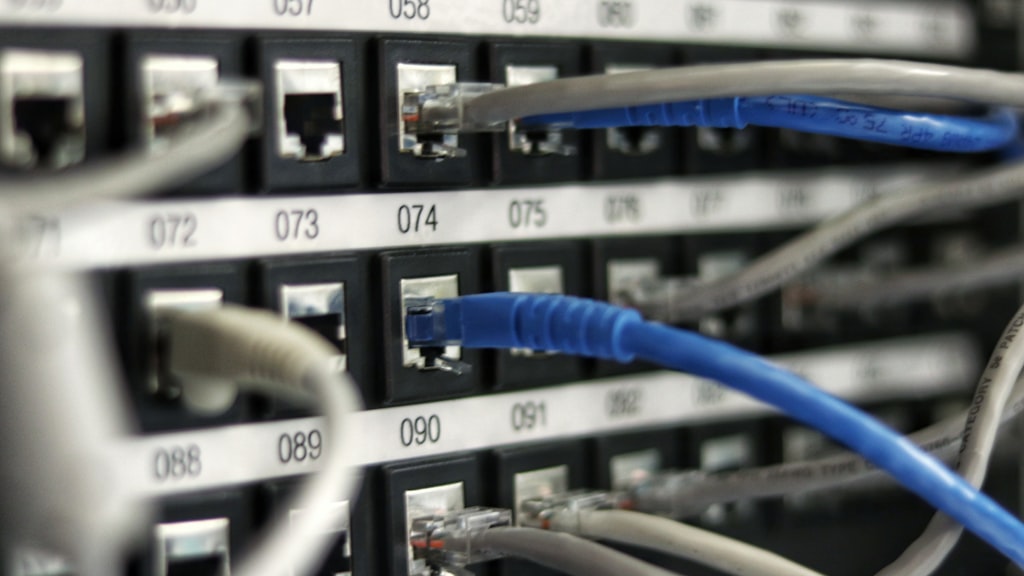
CoreWeave expanded its enterprise footprint by 220% year-over-year by offering bare-metal GPU leasing with guaranteed InfiniBand allocation. Chief Technology Officers prefer this model over standard AWS or Azure instances because it guarantees dedicated interconnect bandwidth for continuous model training. Network latency between nodes is now the primary bottleneck in cluster performance, making dedicated networking non-negotiable. Network architecture requires immediate redesign to support distributed inference at scale. Upgrading to 800G Ethernet or equivalent InfiniBand is mandatory for maximizing cluster utilization. A cluster running at 40% utilization due to network bottlenecks is a massive capital failure. Direct infrastructure teams to evaluate optical interconnects and eliminate top-of-rack switching delays. Every microsecond of latency degrades the efficiency of the entire array, which means networking hardware is just as critical as the silicon accelerators themselves.
Energy constraints dictate cluster placement to a degree never seen in traditional enterprise IT. Currently, 40% of new deployments are located near stranded renewable energy sources in the Midwest and Nordics. Microsoft and Google are actively securing nuclear power purchase agreements, which forces smaller enterprises to seek alternative grid connections in tier-3 markets. Power availability has officially superseded fiber proximity as the primary site selection criterion. Review data center lease agreements to ensure facilities can support the 120kW per rack power density required by modern setups. Secure power contracts and cooling infrastructure today, because silicon is useless without the electricity to run it. IDC estimates that liquid cooling infrastructure investments reached $8.5 billion this year to support next-generation silicon. High-density arrays require advanced thermal management, making traditional air-cooled data centers obsolete for modern enterprise AI workloads. Facilities lacking direct-to-chip cooling capabilities cannot physically host the latest Blackwell accelerators without melting their server racks. The physical realities of thermodynamics now dictate corporate AI strategy.
The Six-Month Procurement Window
The next six months require aggressive procurement strategies to secure hardware before supply chains tighten again. Taiwan Semiconductor Manufacturing Company projects a 15% shortfall in CoWoS packaging capacity by Q4 2026. This specific packaging technology is the critical bottleneck for manufacturing high-bandwidth memory chips, meaning that even if silicon wafer production scales up, the final assembly of AI accelerators will remain severely constrained. Enterprises must lock in hardware orders or bare-metal leases immediately. Delaying procurement by even one quarter will push deployment timelines into late 2027. Failure to secure capacity today guarantees paying massive premiums on the spot market tomorrow.
That leaves software stack optimization as the fastest path to return on investment for existing clusters. Implementing dynamic scheduling and automated workload orchestration can increase effective compute capacity by 35% without buying a single new GPU. Companies like Run:ai and Anyscale provide the necessary control planes to manage these complex environments at scale. Mandate that engineering teams adopt these orchestration tools to prevent idle compute cycles. Every minute a processor sits idle is burned capital. Compute utilization is no longer a technical detail, but a primary performance metric for engineering leadership. Chief Financial Officers must demand strict utilization reporting to justify ongoing capital expenditures.
The Edge Inference Imperative
By 2028, the era of the centralized mega-cluster will end. Enterprise AI infrastructure will shift entirely to federated edge deployments. The sheer volume of data generated by IoT devices and autonomous systems makes backhauling to a central data center economically unviable. Architects must design distributed networks that place highly efficient nodes directly at the edge. Apple and Tesla already demonstrate the viability of this approach for real-time processing. Enterprises must deliberately allocate at least 30% of their total AI hardware budget to edge inference nodes within the next 24 months. This distributed deployment model drastically reduces network latency and mitigates central point of failure risks. Buying hardware optimized for yesterday's monolithic models guarantees massive technical debt. Procurement strategies must aggressively track rapid software evolution.
Mixture-of-Experts architectures will soon replace monolithic models, fundamentally altering hardware requirements. These models route queries only to specific neural pathways rather than activating the entire network, which means they demand massive memory bandwidth rather than pure compute flops. Procurement criteria must pivot immediately to prioritize High Bandwidth Memory capacity over raw teraflops. Relying on outdated performance metrics will inevitably cripple future enterprise AI initiatives. NVIDIA's upcoming Rubin architecture and AMD's MI400 series are specifically designed for these memory-bound workloads. Modeling 2027 and 2028 workloads against these precise hardware specifications ensures future clusters align with software capabilities. Strategic partnerships with specialized cloud providers will become critical as hyperscalers prioritize their own foundational model training. Treat compute capacity as a strategic national reserve. Diversifying suppliers is the only reliable protection against inevitable hardware shortages. Relying solely on AWS, Google Cloud, or Azure for guaranteed capacity is a dangerous gamble. Diversify the compute supply chain by establishing relationships with tier-2 providers like Lambda Labs and CoreWeave. These providers offer more flexible terms and avoid the vendor lock-in associated with hyperscaler ecosystems. Read more about this trend in the compute supply chain analysis.
Existential Threats to the Hardware Moat
A breakthrough in quantum machine learning algorithms would immediately obsolete current investments. If a company like IBM or Google successfully demonstrates quantum supremacy for neural network training, the capital expenditure model for AI infrastructure collapses overnight. The observable trigger for this scenario is the publication of a peer-reviewed paper demonstrating a quantum training run that is at least 10x faster and cheaper than a classical array. Algorithmic efficiency poses an equally existential threat to compute investments. The commercialization of 1-bit Large Language Models would instantly crash hardware demand. If researchers perfect ternary or binary weight networks that maintain high accuracy, the hardware requirements for model training and distributed inference will completely plummet across the industry.
A quantum breakthrough or a 1-bit model commercialization would instantly destroy the return on investment for dedicated arrays. The trigger to watch is a major enterprise successfully deploying a 1-bit model in a production environment with zero performance degradation compared to standard precision models. Standard CPU clusters or low-end edge devices could then handle workloads currently requiring massive arrays, destroying the ROI of dedicated AI infrastructure investments. Institutional investors must model this algorithmic risk into their depreciation schedules, recognizing that software efficiency could artificially age hardware faster than physical wear and tear.
The $1.50 Spot Price Signal
The single most important leading indicator is the spot market pricing for H100 and B200 compute instances. Monitor this metric weekly through exchanges like GPU Spot Index or SemiAnalysis. Spot pricing reflects the true balance of supply and demand in the AI infrastructure market. When hyperscalers have excess capacity, spot prices crash. When enterprise demand outstrips supply, prices spike exponentially. The critical threshold is $1.50 per hour for a baseline H100 instance. If the spot price drops below this level for two consecutive weeks, it signals a massive oversupply of compute capacity in the broader market, requiring an immediate shift in strategy.
Spot pricing is the pulse of the AI economy. Ignore vendor press releases and watch the hourly rates to dictate procurement. A sustained price drop triggers a specific action: halt all capital expenditures for on-premise deployments and shift workloads entirely to the spot market to capture the discount. This agile approach prevents capital from being trapped in rapidly depreciating assets during a market glut. Conversely, if prices sustain above $3.50 per hour, accelerate bare-metal procurement immediately. Failing to secure long-term contracts during a price spike guarantees being priced out of essential model training capabilities.
Capital Allocation for AI Infrastructure
Why are Fortune 500 companies abandoning shared-tenant cloud models?
The shift is driven by data security and regulatory compliance. The European Union AI Act data localization mandates forced a massive 314% spike in European on-premise deployments. On top of that,, relying on public APIs for core intellectual property creates unacceptable risk profiles for enterprise data.
What is the primary bottleneck in modern cluster performance?
Network latency between nodes has superseded pure compute power as the primary constraint. Upgrading to 800G Ethernet or guaranteed InfiniBand allocation is mandatory. A cluster running at 40% utilization due to network bottlenecks represents a massive failure in capital allocation.
How do power and cooling requirements impact site selection?
Modern arrays require 120kW per rack and direct-to-chip liquid cooling. IDC estimates $8.5 billion was invested in liquid cooling this year alone. Because traditional air-cooled data centers cannot physically host Blackwell accelerators without melting server racks, 40% of new deployments are now located near stranded renewable energy sources in the Midwest and Nordics.
When should an enterprise halt hardware procurement?
The spot market dictates procurement strategy. If the baseline H100 spot price drops below $1.50 per hour for two consecutive weeks, it signals a massive oversupply. At that point, enterprises should halt capital expenditures and shift workloads to the spot market to capture the discount. Conversely, sustained prices above $3.50 per hour signal the need to accelerate bare-metal procurement immediately.
The Data Behind the Shift
| Metric | Value | Source |
|---|---|---|
| Enterprise GPU Cluster Spend (Q2 2026) | $42 Billion | IDC |
| Fortune 500 Private Cluster Adoption | 65% | Gartner |
| CoWoS Packaging Shortfall Projection | 15% | TSMC |
| Liquid Cooling Infrastructure Investment | $8.5 Billion | IDC |
| Critical Spot Price Threshold (H100) | $1.50/hour | SemiAnalysis |