
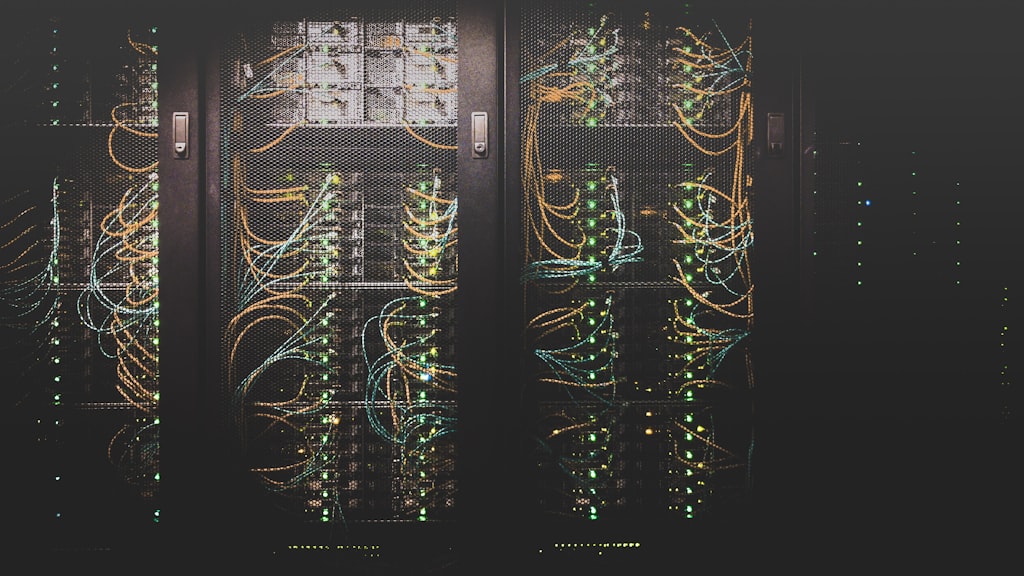
AI infrastructure investment has reached a $150 billion run rate in 2026, marking a violent shift in how capital flows through the technology sector. This is not a software story. It is a massive industrial buildout spanning chips, servers, storage arrays, networking fabric, liquid cooling, electrical systems, and the raw grid capacity required to keep artificial intelligence running at scale. The financial consensus reflects a market that has decisively exited the experimental pilot phase, with baseline estimates from IDC placing the current footprint at $150 billion, representing a 50% increase from 2025. Projections from Gartner and S&P Global map a steep continuation of this trend, clustering around a 25% compound annual growth rate from 2025 to 2030 and converging near $250 billion by 2027. Bloomberg’s 2026 analysis indicates that data center infrastructure absorbs the largest share of this capital, pulling funds away from traditional enterprise software budgets and redirecting them into concrete, copper, and silicon. Three distinct forces are doing the heavy lifting to drive this expansion: higher training costs for next-generation frontier models, rising inference traffic from consumer and enterprise applications, and a relentless race among cloud providers to secure physical capacity before demand outruns supply.
The competitive landscape across this stack is tightening as Amazon Web Services, Microsoft Azure, Google Cloud, NVIDIA, IBM, Oracle, CoreWeave, Equinix, and Digital Realty fight for share. The battle has moved far beyond the simple accumulation of graphics processing units. It is now a contest over who can secure dedicated power agreements, lock in long-term hardware supply chains, position server clusters near low-cost electricity sources, and guarantee stable performance for enterprise customers who cannot tolerate downtime. Power, rather than headline compute metrics, is now the scarcest asset in the ecosystem. Because power and thermal management systems are rising faster than many software budgets, the fundamental economics of AI infrastructure investment are changing for hyperscalers, specialized neoclouds, and corporate buyers alike. The defining question for 2026 is how much of the next two years of global capital expenditure will flow into these physical assets, and which operators possess the execution discipline to translate that spending into durable revenue, margin expansion, and permanent market share.
Hits Critical Inflection: What Is Fueling the Rush to AI Infrastructure Investment
AI infrastructure spending is accelerating because model demand continues to expand simultaneously at both extreme ends of the market. At the high end of the spectrum, frontier model training still requires massive, tightly coupled clusters containing tens of thousands of accelerators, supported by high-bandwidth memory, advanced networking interconnects, and sophisticated liquid cooling systems. At the low end, enterprise inference traffic is surging as AI copilots, enterprise search tools, customer service bots, coding assistants, and predictive analytics applications transition from testing environments into daily production. Training built the foundation of this market, but inference is making the revenue sticky.
This transition represents a structural shift in how data centers operate. Training drove the initial wave of the buildout through massive, concentrated capital injections, but inference is now turning artificial intelligence into a persistent, always-on utility layer. Because inference workloads run constantly, servers remain active for longer periods, which means more data moves through the network fabric and more electricity is consumed around the clock. Even modest gains in daily active usage create material infrastructure demand because AI workloads are inherently memory-heavy and highly sensitive to latency. Consequently, corporate buyers are no longer just paying for raw compute cycles; they are paying premiums for network throughput, storage input/output speeds, and the cooling headroom necessary to prevent thermal throttling.
Analysts at Gartner have argued that AI spending is following a classic infrastructure adoption curve, where an early period of aggressive overbuilding is followed by a long, sustained phase of utilization catch-up. That historical pattern helps explain why the major cloud platforms are still expanding their physical footprints aggressively even as some enterprise buyers complain about high pricing. If physical capacity is not available the exact moment the next wave of application demand arrives, the infrastructure provider loses both immediate revenue and long-term strategic relevance. Specialized AI zones are tightening the market even further. AWS, Microsoft Azure, Google Cloud, and Oracle Cloud Infrastructure are all actively adding specific geographic regions, isolated clusters, and dedicated instance families tuned explicitly for training and inference workloads. These specialized deployments require entirely new server architectures, upgraded optical networking, and significantly stronger power delivery mechanisms. In several key geographic markets, the primary bottleneck is no longer the availability of real estate; it is the availability of enough utility-grade megawatts to bring a newly constructed campus online.
Enterprise adoption is broadening the market base and diversifying the revenue streams supporting this buildout. Firms operating in financial services, healthcare, retail, manufacturing, defense, and media are systematically increasing their AI budgets to support document processing, fraud detection, supply chain forecasting, and automated software development. Many of these corporate projects start as small departmental pilots, which then expand rapidly across the organization as efficiency returns become visible to management. As this deployment spreads, the underlying infrastructure bill rises in tandem. AI infrastructure investment is now a board-level issue because it simultaneously shapes a company's operating cost structure, product development velocity, and ultimate competitive position. Companies that delay their capacity procurement decisions risk suffering slower model performance and longer product iteration cycles. Conversely, companies that spend too aggressively too early risk suffering lower hardware utilization and severe pressure on their return on invested capital. That specific financial tension is the central dynamic driving the 2026 market reset.
Who Is Winning the Boom
Amazon Web Services remains one of the most dominant buyers and builders in the global market. Company filings for FY2026 show AWS AI services revenue growing 30% year over year to reach $10 billion. AWS continues to aggressively expand its specialized instance types, deploy its own custom silicon, and broaden its regional coverage as it works to protect its historical lead in enterprise cloud computing. Its structural ability to bundle raw compute, storage, networking, and managed AI orchestration tools gives it a distinct advantage in customer stickiness, especially for large multinational firms that demand a single provider to handle multiple diverse workload types.
Microsoft Azure has matched this aggressive pace and is capturing significant value from the application layer down to the silicon. Company filings for FY2026 show Azure AI revenue rising 40% year over year to hit $8 billion. Microsoft’s partnership strategy stands out as a key differentiator. Its deep collaborative work with NVIDIA on custom AI chips, combined with its aggressive integration of AI services across Microsoft 365, GitHub, and enterprise security platforms, is creating a massive funnel of demand that extends far beyond raw compute consumption. Azure benefits disproportionately when enterprise customers move from isolated pilots into full production because those live deployments almost always require broader cloud infrastructure adoption, rather than just the purchase of a single standalone AI service.
Google Cloud is pursuing a highly differentiated angle by attacking operating costs through AI-driven data center optimization. The company stated in a 2026 press release that it successfully cut facility energy consumption by 30% through the deployment of AI-powered cooling systems. That metric matters immensely because liquid and advanced air cooling are becoming the fastest-growing budget lines in AI-heavy facilities. Google also maintains a formidable position in custom silicon design, which helps the company reduce its dependence on merchant GPU supply chains and significantly improve workload economics for selected enterprise customers. Capacity acts as a strategic weapon when a provider can deliver it first, and Google's efficiency gains allow it to maximize the compute density of its existing power envelopes.
NVIDIA remains the clearest and most direct beneficiary at the foundational chip layer. Company filings for FY2026 show NVIDIA's data center revenue surging 50% year over year to reach $15 billion. That financial figure is critical because it proves NVIDIA is no longer just selling isolated hardware accelerators; it is selling an integrated platform that encompasses GPUs, high-speed networking, proprietary software, and full systems-level design support. Its absolute control over the high-performance AI stack gives the company unprecedented pricing power, but it also places NVIDIA at the exact center of every supply chain constraint that currently affects the broader market.
IBM has taken a deliberately different route, focusing its capital on AI-powered data center management software and executing targeted acquisitions of AI startups throughout 2025 and 2026, according to company press releases. IBM is not attempting to dominate the merchant accelerator market; instead, it is targeting the complex orchestration, workload management, and enterprise integration layers. For large, heavily regulated clients in banking and healthcare, that specific market position is highly useful because it helps connect new generative AI systems to existing corporate governance and compliance frameworks.
Oracle has emerged as a surprisingly meaningful infrastructure contender, building a reputation for executing aggressive, large-scale capacity deals. Oracle is specifically targeting massive AI workloads that require high-performance networking and rapid physical deployment. CoreWeave, meanwhile, has gained significant industry attention as a specialized neocloud provider focused entirely on GPU-centric workloads. Its rapid rise reflects a broader structural trend indicating that market demand is no longer limited to the biggest hyperscalers. Smaller infrastructure specialists are finding highly profitable room to operate by moving faster than legacy providers, signing hardware supply agreements early, and targeting startup customers that require massive capacity immediately and cannot wait for hyperscaler utility queues to clear.
At the foundational physical layer, Equinix and Digital Realty are capturing immense value from the industry's move toward more distributed and interconnection-heavy deployments. These real estate investment trusts sit at the critical physical junctions of cloud networks, enterprise data centers, and global internet traffic. As AI systems spread across different geographic regions and specialized use cases, the strategic value of nearby network connectivity and flexible colocation space rises exponentially. Vertiv, Schneider Electric, and other specialized thermal and power vendors are also gaining massive revenue tailwinds from the higher capital spending on liquid cooling loops, heavy electrical switchgear, and uninterruptible backup power systems.
The contest has clearly moved beyond a simple cloud-versus-chip narrative. Hyperscalers still control the absolute largest capital budgets, but specialized providers are successfully attacking specific customer pain points. While NVIDIA controls a major share of accelerator demand, AMD is pushing harder into the data center with its Instinct line, competing aggressively on total cost of ownership and immediate hardware availability. Intel is working to maintain relevance in data center AI through its Gaudi accelerators and broader platform integration efforts. On top of that,, the deployment of custom silicon from AWS, Google, and Microsoft is adding severe pressure to the market by reducing those hyperscalers' dependence on external merchant chip vendors for selected internal workloads.
Fierce competition is also emerging in the network layer. High-speed interconnects, Ethernet optimization protocols, advanced optical components, and low-latency switching architectures are now viewed as highly strategic parts of AI infrastructure investment. Arista Networks, Broadcom, and several specialized optical component suppliers are benefiting massively as data movement becomes just as important as data processing. The underlying reason is straightforward; massive AI clusters do not just need raw compute to function; they require petabytes of data to travel quickly, reliably, and consistently across server racks, data center rooms, and geographic regions without dropping packets.
Another layer of intense competition is taking place in data center real estate and power procurement. Real estate investment trusts and private infrastructure owners who possess secured access to grid energy, zoning permits, and industrial land are gaining massive pricing use. In some heavily developed regions, electrical power is now the decisive constraint limiting growth. The facility operator that can successfully secure a 15-year electricity contract and bring a new campus online a full year earlier than competitors often wins the enterprise customer, even if the operator's sticker price for the lease is significantly higher.
How Rules Are Raising the Stakes
Government policy is now a direct and forceful driver of infrastructure spending. The EU AI Act, passed in 2025, has forced multinational companies to invest much more heavily in data governance, algorithmic traceability, and region-specific physical hosting. Microsoft and Google each committed $10 billion to EU AI infrastructure, according to company press releases issued in 2025. Those massive capital commitments are not only about achieving regulatory compliance; they are fundamentally about securing market access, guaranteeing data residency, and building customer trust across highly regulated European sectors.
Data sovereignty requirements are becoming increasingly common in Europe, the Middle East, and parts of Asia. Sovereign governments want absolute control over where their citizens' data is physically stored, which specific models are permitted to process that data, and how digital exports are managed across borders. That political reality means global cloud providers need to build local capacity, establish more regional edge computing locations, and maintain stronger hardware audit trails. It also means that AI infrastructure spending is no longer evenly distributed across the globe. Capital is flowing rapidly to jurisdictions that can offer a stable legal framework, immediate grid access, and permitting clarity. Compliance is becoming a primary procurement lever.
U.S. export controls represent another massive factor shaping the physical buildout. Federal restrictions on advanced chip shipments to certain foreign markets have encouraged multinational firms to aggressively diversify their supply chains and radically increase their inventory planning buffers. This regulatory friction does not always slow the market down; in some specific cases, it actually speeds up capital investment because anxious customers rush to secure physical capacity before sudden policy changes tighten access further. The result is a volatile investment cycle shaped just as much by geopolitics as by actual product demand.
At the same time, several regional governments are offering massive financial incentives to attract data centers, chip assembly plants, and AI research campuses to their jurisdictions. Tax benefits, subsidized utility contracts, and free industrial land packages are helping some unexpected regions win massive infrastructure projects that would otherwise go to established tech hubs. Regulation is no longer just a brake on AI infrastructure. In many cases, it is a compelling financial reason to spend capital sooner and build physical facilities closer to the end customer. That dynamic helps explain why AI infrastructure investment has remained incredibly strong even in a more cautious macroeconomic environment.
The Bottlenecks Ahead
There are three key systemic risks threatening the AI infrastructure market. The first is severe supply chain strain, with analyst estimates pointing to a 30% probability of critical GPU shortages occurring in 2027. While the broader market has improved since the earliest pandemic-era supply crunches, baseline demand can still easily outrun production capacity, especially when a new generation of hardware accelerators lands and massive enterprise customers all rush to upgrade their clusters at the exact same time. These acute shortages can delay enterprise deployments, raise component pricing, and push smaller corporate buyers to the back of the procurement line.
The second major risk is sudden regulatory change, with analyst estimates indicating a 20% probability of stricter AI rules being implemented in the U.S. in 2027. New federal rules could drastically increase compliance costs, add heavy reporting burdens, or intentionally slow down some frontier model deployments. That specific risk is especially relevant for financial services, healthcare, and public sector clients, where data governance requirements are already exceptionally high. A slower regulatory approval cycle can severely reduce utilization rates in newly built data center capacity, which in turn lengthens the payback periods for the investors who funded the build.
The third and perhaps most physical risk is power grid constraint, with analyst estimates showing a 15% probability of widespread electrical outages in data center-heavy regions in 2027. This specific risk is often underestimated by software investors because it does not show up in cloud management dashboards; it shows up in municipal utility queues, massive transformer lead times, and delayed interconnection approvals. Cheap compute does not matter if the local grid is full. If electrical power cannot reach the campus, the servers cannot run, which makes heavy electrical infrastructure just as strategic as the silicon chips themselves.
There are also significant financial risks embedded in this transition. Heavy capital expenditure can severely pressure a company's free cash flow, especially if cloud providers build massive facilities ahead of actual customer demand. Hardware depreciation schedules are shortening rapidly as chip innovation cycles accelerate, which can severely compress operating margins if server utilization does not keep pace with the depreciation curve. In some cases, enterprise customers are also pushing hard for lower hourly prices as more specialized neocloud providers enter the market. That dynamic creates a delicate balance between driving volume growth and maintaining an acceptable return on invested capital. Execution, not demand, is what often breaks these massive projects. AI infrastructure projects are inherently complex, requiring flawless coordination across hardware procurement, concrete construction, utility planning, optical networking, physical security, and software integration. Delays in any one of those areas can cascade through the entire project timeline, meaning companies with deep historical experience in large-scale industrial deployment possess a massive advantage over software firms entering the physical market late.
Managing Depreciation and ROIC
For Chief Financial Officers, the $150 billion AI infrastructure boom presents a complex capital allocation challenge. The rapid acceleration of chip cycles means that hardware depreciation schedules are compressing, forcing finance teams to model shorter useful lives for highly expensive GPU clusters. If a company spends heavily on capacity but fails to secure immediate, high-utilization workloads, the resulting depreciation expense will severely compress operating margins. CFOs must balance the strategic necessity of securing capacity against the financial risk of stranded assets, which means procurement decisions are increasingly tied to guaranteed, long-term internal demand rather than speculative future projects.
Procurement and Lock-in
Chief Information Officers are navigating a deeply fragmented procurement landscape. The choice between utilizing a broad hyperscaler like AWS or Microsoft Azure versus a specialized neocloud like CoreWeave or Oracle dictates a company's operational flexibility. Hyperscalers offer massive breadth, integrated enterprise security, and simplified governance, which is highly attractive for CIOs managing complex regulatory requirements. However, neoclouds offer raw speed, architectural flexibility, and immediate access to scarce GPUs. CIOs are increasingly adopting a mixed strategy, placing critical, latency-sensitive inference workloads in hyperscale environments while routing experimental training workloads to specialized providers to optimize total cost of ownership.
Margin Compression and Capex Concentration
Institutional investors are closely monitoring the tension between capital expenditure and free cash flow generation. Analyst commentary from S&P Global suggests that capex concentration among the largest cloud platforms will intensify significantly through 2027. That concentration reinforces the structural lead of the biggest buyers, because hardware suppliers naturally prefer predictable, massive volume orders. However, it also raises severe antitrust and market concentration concerns, because a shrinking group of mega-cap firms is controlling an ever-larger share of the global capital spend. Investors are watching closely to see which operators can maintain pricing power and defend their margins as the physical buildout scales toward the $250 billion mark.
Frequently Asked Questions
Related MarketIntel briefing: read $150 Billion AI Infrastructure Boom Hits Critical Inflection 2026 for a connected view on this market signal.